Why Nitrogen Purity Matters in MAP Packaging
Nitrogen is the workhorse of Modified Atmosphere Packaging (MAP), extending shelf life, protecting product quality, and reducing spoilage across the food industry. But while most processors focus on gas composition and packaging equipment, one critical factor often gets overlooked: nitrogen purity. The question isn’t just how much nitrogen you use, it’s how clean that nitrogen needs to be to meet food safety standards and protect your product. In an industry where contamination risks can lead to recalls, downtime, and damaged brand reputation, understanding MAP gas purity is essential.
What Is Food‑Grade Nitrogen Purity?
For MAP applications, nitrogen must be clean, dry, and free of contaminants such as particulates, moisture, oil vapour, and microbial impurities. Food‑grade nitrogen typically requires purity levels of 99% to 99.999%, depending on the product and packaging environment. High‑moisture foods, oxygen‑sensitive products, and ready‑to‑eat items often demand the highest purity levels to prevent oxidation, microbial growth, and off‑flavors.
How Clean Does Nitrogen Need to Be for MAP?
High-Moisture Foods
Require extremely low moisture and high nitrogen purity to prevent microbial growth.
Oxygen‑Sensitive Products
Need ultra‑high purity nitrogen to slow oxidation and preserve colour, flavour, and texture.
Ready‑to‑Eat Items
Demand the highest purity levels to minimise contamination risks and maintain safety.
Purity isn’t just about the gas itself, it’s also about the delivery system, including filtration, piping, and point‑of‑use controls. Even the cleanest nitrogen can become contaminated if the system isn’t properly maintained.
Common Sources of Nitrogen Contamination
Moisture and Dew Point Issues
Moisture promotes microbial growth and reduces shelf life.
Oil Vapor and Hydrocarbons
Oil contamination can occur in poorly maintained systems or non‑food‑grade compressors.
Microbial Contamination
Biofilm, piping residue, and poor filtration can introduce harmful microorganisms.
To meet regulatory expectations under food & beverage specifications such as SFQ, processors must ensure nitrogen used in MAP meets the same hygienic standards as any other food‑contact utility.
How to Maintain Nitrogen Purity in MAP Systems
Filtration and Oil‑Free Technology
Use high‑efficiency filtration and oil‑free compressors to eliminate oil aerosols and particulates.
Moisture Control and Drying
Monitor dew point and use dryers to prevent moisture‑related contamination.
Point‑of‑Use Protection
Install microbial‑barrier filters and final filtration at the packaging line.
Routine Testing and Monitoring
Verify purity through scheduled testing and continuous monitoring to stay audit‑ready.
Our Nitrogen Gas Generation Solutions for MAP Applications
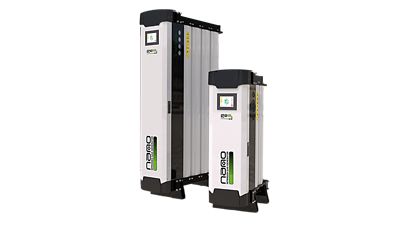
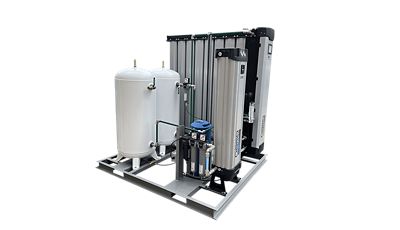
We offer both fully integrated skid systems and stand‑alone nitrogen generators to match any production environment. Our nitrogen gas generator skid packages are purpose‑built for food‑grade Modified Atmosphere Packaging (MAP) and come fully equipped to deliver clean, dry, high‑purity nitrogen. Each turnkey skid integrates multi‑stage filtration, desiccant or refrigerated air drying, nitrogen generation technology, moisture control, and point‑of‑use protection, pre‑assembled, pre‑tested, and engineered to operate as a complete purity solution. With all critical treatment stages built in, these systems eliminate contamination risks and performance issues common with piecemeal setups. Compact footprints, simplified installation, and built‑in monitoring give food manufacturers a reliable, ready‑to‑run MAP nitrogen supply that protects product quality, reduces downtime, and ensures consistent gas purity.