Blower purge desiccant dryers for cement plant reliability:
A cement plant chose nano ABP 1600 blower purge desiccant dryers to fight moisture in its compressed air system—a major challenge for the sector.
A cement plant struggled with ongoing moisture problems even though it already used desiccant dryers. Wet compressed air led to contributing to buildup in the finish mill nuisance dust collector, blinding filter bags, more maintenance, and interruptions in production. After installing three nano ABP 1600 blower purge desiccant dryers, the plant was able to maintain a steady ‑40°F pressure dew point at high flow rates. This upgrade stopped moisture from getting through, cut purge consumption of less than 2%, and made the system more reliable while also reducing operating costs.
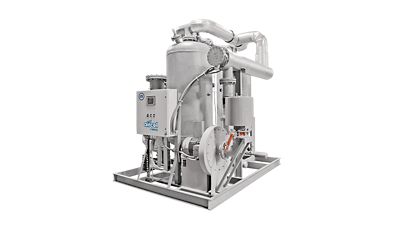
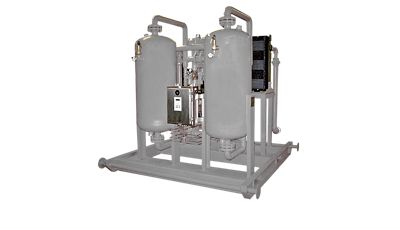
 nano ABP 1600 blower purge dryers
Solving a Persistent Moisture Problem with Three nano ABP 1600 Blower Purge Desiccant Dryers
The dryer scope of this project was not about replacing aging equipment, but fixing a moisture problem that was already impacting production.
The cement plant was operating desiccant drying equipment, yet moisture was still reaching critical downstream processes. Because wet compressed air entered the finish mill nuisance dust collector, it caused buildup by dampening dust. This moisture-blinded filter bags, which led to more frequent maintenance and resulted in avoidable production disruptions.
The plant installed drying equipment, but it was not delivering stable, plant‑wide dew point control where it mattered most.
Therefore, the issue was not that the plant “needed a dryer.”
The issue was that the plant needed the right drying architecture for a high‑demand, continuous‑duty industrial system.
That solution was three nano ABP 1600 blower purge desiccant dryers.
Why the Existing Drying Approach was Failing
The issue wasn’t missing air treatment equipment, but poor performance under real operating conditions.
The system was experiencing:
Inconsistent pressure dew point control
Moisture carryover into critical downstream equipment
Excessive water loading from plant conditions
Inconsistent desiccant renewal
High consequence from even minor moisture breakthrough
In a cement plant, moisture is not a minor nuisance. It directly affects dust collection efficiency, valve and actuator reliability, material handling, and overall process uptime.
Standard refrigerated or heatless desiccant dryers could not deliver the reliability this application required. The plant demanded continuous, low‑dew‑point air at high flow, without wasting compressed air for renewal.
That requirement pointed directly to the ABP platform.
Why Three nano ABP 1600 Desiccant Dryers Were the Right Fit
nano specifically engineered the ABP 1600 blower purge twin‑tower desiccant dryer to ensure dew point stability and operating efficiency in high‑flow industrial applications.
Each unit handles 1,600 scfm and delivers a ‑40°F pressure dew point at design conditions. This makes it well suited for large‑scale systems where moisture breakthrough carries consequences far beyond air quality alone.
By installing three ABP 1600 dryers, the plant was able to gain the capacity required to support high, continuous demand. This installation also enabled the system to maintain consistent low‑dew‑point performance.
More importantly, the ABP design addressed the biggest limitation of conventional desiccant dryers in large plants: purge air waste.
Traditional heatless desiccant dryers often consume 15–20% of rated compressed air for recovery. Blower purge dryers use heated ambient air, not valuable compressed air, to recover the desiccant and drastically reduce that loss.
That efficiency advantage is the core benefit of the ABP design.
Rather than sacrificing compressed air, the ABP 1600 regenerates using:
A dedicated 10 HP regeneration blower
A 37 kW regeneration heater
Heated ambient air for desiccant regeneration
Average purge consumption of less than 2%
The result is stable dew point performance with significantly reduced compressed air loss and lower operating cost.
A Closer Look at the Installation


Why It Mattered in this Application
For this cement plant, the value of the three ABP 1600 desiccant dryers extended well beyond simply producing “dry air.”
The upgrade delivered:
Stable low dew point to protect dust collection performance
Reduced moisture carryover into process‑critical equipment
Significantly lower purge losses compared to heatless desiccant dryers
Lower operating cost at high continuous flow rates
More reliable renewal in a harsh industrial environment
Improved overall plant reliability through consistent air quality
The dryers were not just replacing air treatment equipment.
They were correcting a reliability issue directly tied to moisture contamination.
That is what made the dryer portion of this project impactful.
The three nano ABP 1600 blower purge dryers did more than dry compressed air. They reduced moisture‑related production risk while lowering the true cost of producing high quality, low‑dew‑point air.
Key Takeaways
- Moisture problems can persist even when desiccant dryers are installed, if the drying architecture is not designed for continuous, high‑demand operation.
- In cement manufacturing, even minor moisture breakthrough can disrupt dust collection, maintenance cycles, and production uptime.
- Blower purge desiccant dryers provide more stable dew point control without wasting large volumes of compressed air for regeneration.
- Installing three nano ABP 1600 dryers delivered plant‑wide ‑40°F pressure dew point at high flow rates.
- Reduced purge consumption (<2%) translated directly into lower operating costs and improved compressed air system efficiency.
- Reliable moisture control improved overall plant reliability by protecting downstream process‑critical equipment.