Process cooling is one of the most essential utilities in food and beverage manufacturing, yet it’s often overlooked until temperature fluctuations begin causing production delays, product defects, or food safety risks. Across every stage of production from fermentation and crystallization to cooking, chilling, packaging, and environmental control, precise temperature management directly impacts product safety, consistency, flavor, texture, and shelf life.
Industrial chillers and process cooling systems are critical for maintaining stable temperatures that support consistent production and prevent microbial growth, spoilage, and process variability. Reliable cooling protects product integrity, ensures operational efficiency, and helps facilities meet increasingly stringent food safety and regulatory standards.
A properly designed process cooling solution regulates temperatures that influence:
- Microbial safety and contamination prevention
- Product structure, viscosity, and texture
- Fermentation performance and biochemical reactions
- Crystallization and thermal processing steps
- Fill accuracy, packaging quality, and line efficiency
When cooling capacity is undersized or temperature control is unstable, even minor deviations can compromise:
- Product quality and batch‑to‑batch consistency
- Food safety and regulatory compliance
- Production throughput and equipment uptime
- Shelf stability, sensory attributes, and customer satisfactisfaction
Cooling systems encounter a variety of issues that directly affect production reliability:
- Heat load variability - batch swings, seasonal changes
- Improper glycol concentration - freezing, fouling, poor heat transfer
- Undersized chillers or pumps - slow pull‑down, long recovery times
- Scale, biofilm, or fouling - reduced efficiency and capacity
- Ambient temperature influence - unstable packaging conditions
- Aging equipment - compressor failures, refrigerant leaks
Understanding these risks is the first step toward building a stable, compliant process cooling system.
Cooling supports nearly every category of food and beverage production.
Critical applications include:
- Fermentation temperature control (brewing, wine, dairy, cultured foods)
- Jacketed tank cooling (soups, sauces, oils, dressings)
- Heat exchanger cooling (continuous processes, beverages, dairy)
- Condenser cooling (stills, distillation, evaporation)
- Crystallization and fat fractionation (confectionery, edible oils)
- Chilling and rapid cooling of cooked products
- Ambient/humidity control around filling and packaging
- Cold temperature stability in batching and blending rooms
Each application demands specific temperature ranges, load profiles, and cooling performance metrics. making proper design essential.
Process cooling systems provide stable temperature control that enables:
- Proper fermentation and microbial activity
- Consistent viscosity and product flowability
- Reliable crystallization, fractionation, and fat control
- Efficient cooking, chilling, and stabilization cycles
- Accurate filling and packaging performance
- Reduced microbial risk in temperature‑sensitive areas
Well-designed cooling systems ensure food and beverage products meet quality, safety, and performance expectations, batch after batch.
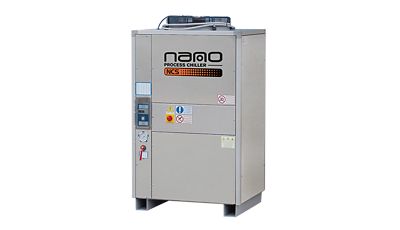
Industrial Process Chillers
Deliver stable chilled water or glycol to tanks, heat exchangers, and equipment requiring controlled temperatures.
Cooling Towers & Condensers
Support refrigeration systems and provide efficient heat rejection.